You're lying in bed at 2 AM, staring at the ceiling, and your brain won't shut off. Sound familiar? Over 70 million Americans struggle with chronic sleep problems, and the $2+ billion sleep supplement industry exists because so many people are searching for something — anything — that helps without the dependency risks of prescription sleep medications like Ambien or Lunesta.
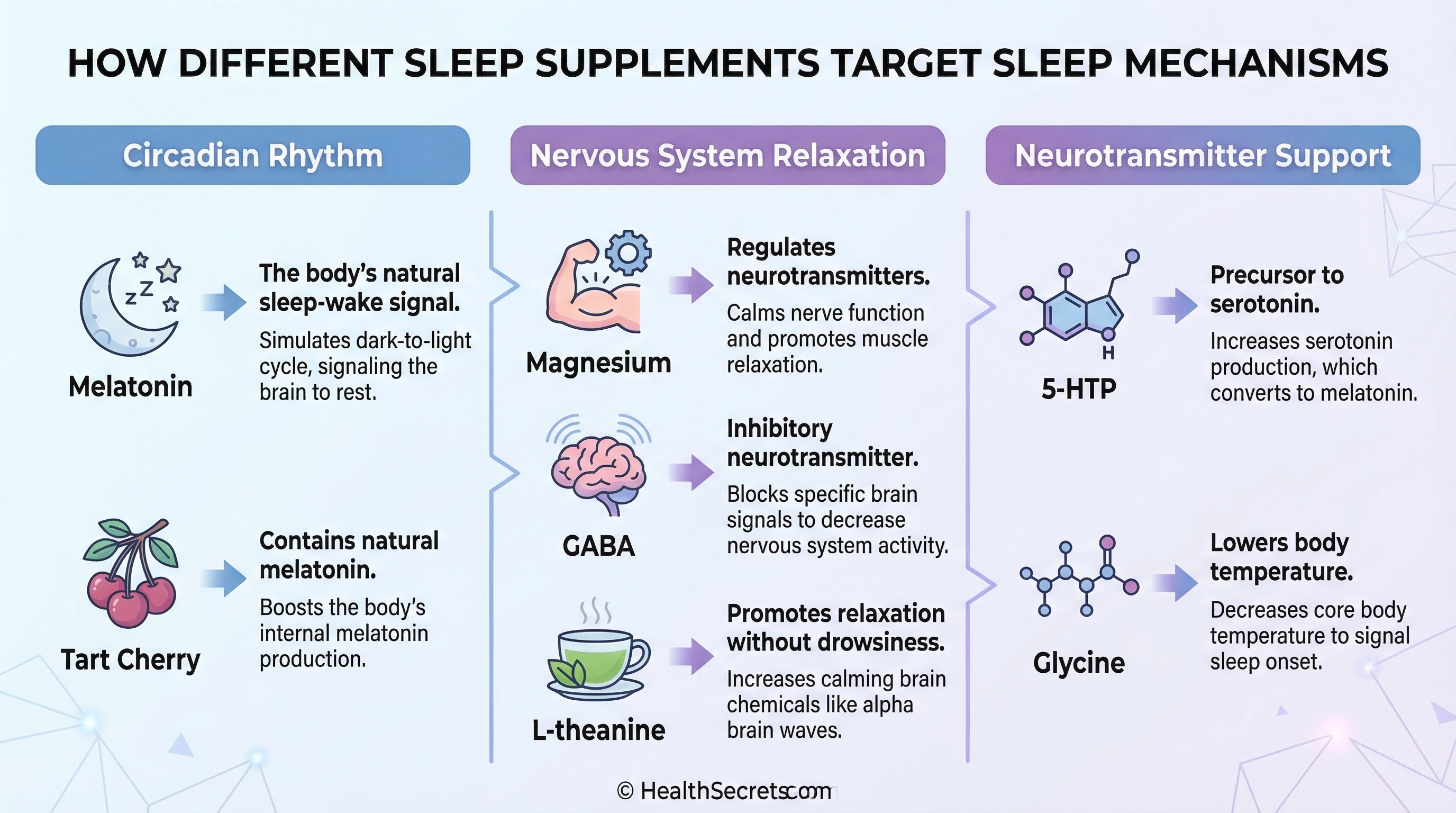
The good news: several sleep supplements have genuine clinical evidence supporting their effectiveness. A 2013 meta-analysis confirmed that melatonin decreases sleep onset latency and improves overall sleep quality. Magnesium supplementation improves sleep quality by roughly 15% in deficient individuals. And a 2019 study found that GABA and L-theanine together decrease sleep latency and increase sleep duration more effectively than either supplement alone.
But here's what most supplement guides won't tell you: not all sleep supplements work the same way, quality varies wildly between brands, and the right choice depends entirely on your specific sleep problem. This guide breaks down the evidence for each major sleep supplement, reviews 10 top products, and gives you a practical framework for choosing what actually works.
For related guidance on optimizing your sleep, explore our sleep optimization guide, mental wellness strategies, and stress management approaches.
What Should You Look for When Choosing a Sleep Supplement?
The best sleep supplements combine clinically studied ingredients in bioavailable forms, transparent dosing, third-party quality verification, and minimal unnecessary additives. With over 100,000 supplement products on the market and no FDA pre-market approval required, knowing what separates quality products from marketing hype saves both money and health risks.
Which Forms of Sleep Supplements Are Most Effective?
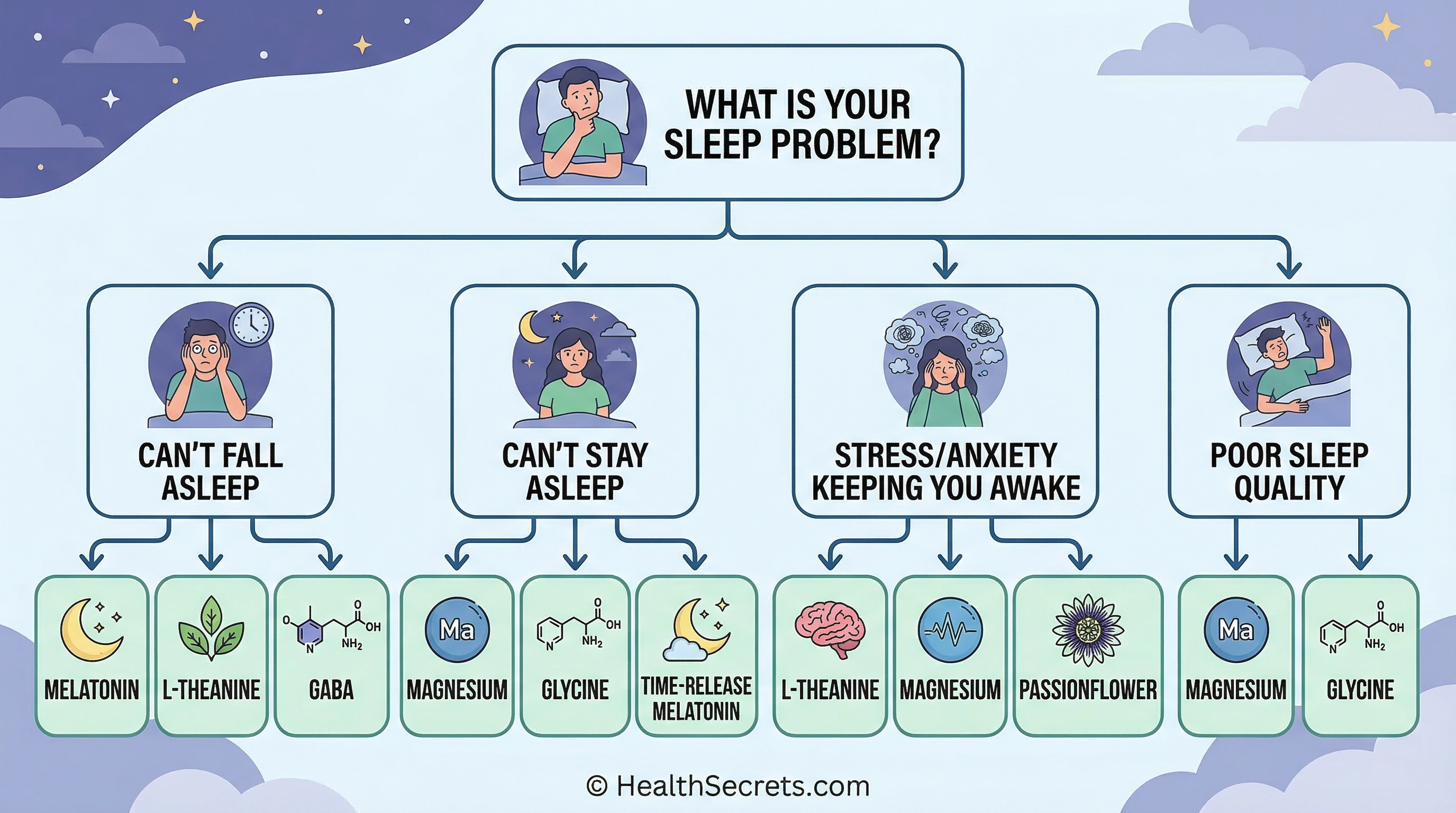
Form matters significantly for absorption and effectiveness. Magnesium glycinate absorbs far better than magnesium oxide (which has only ~4% bioavailability and causes digestive issues). For melatonin, standard-release tablets work well for falling asleep, while time-release formulations help with staying asleep. L-theanine, GABA, and glycine are all well-absorbed in standard capsule or powder form.
How Do You Verify Supplement Quality?
Third-party testing certifications are the most reliable quality indicator. Look for USP (United States Pharmacopeia), NSF International, or ConsumerLab verification. These certifications confirm that the product contains what the label states, is free from harmful contaminants, and meets dissolution standards. A 2017 study found that melatonin supplements varied from 83% to 478% of their labeled dose — third-party testing eliminates this uncertainty.
Red flags to avoid: proprietary blends that hide individual ingredient doses, products with excessive fillers or artificial colors, brands with no third-party testing, and supplements making disease-cure claims.
How Did We Evaluate These Sleep Supplements?
We evaluated each sleep supplement using five weighted criteria: clinical evidence strength (30%), ingredient quality and bioavailability (25%), third-party testing verification (20%), value per serving (15%), and user tolerance profile (10%). Products from established, reputable brands with transparent labeling and verified testing consistently scored highest across these criteria.
For each supplement category (melatonin, magnesium, L-theanine, GABA, herbal, and combination), we reviewed published clinical trials, verified ingredient forms against bioavailability research, confirmed third-party certifications, calculated cost per effective serving, and assessed reported side effect profiles. We prioritized products from brands with established reputations in the supplement industry: NOW Foods, Thorne, Life Extension, Doctor's Best, Nature's Way, and Jarrow Formulas.
How Do You Use Sleep Supplements Effectively?
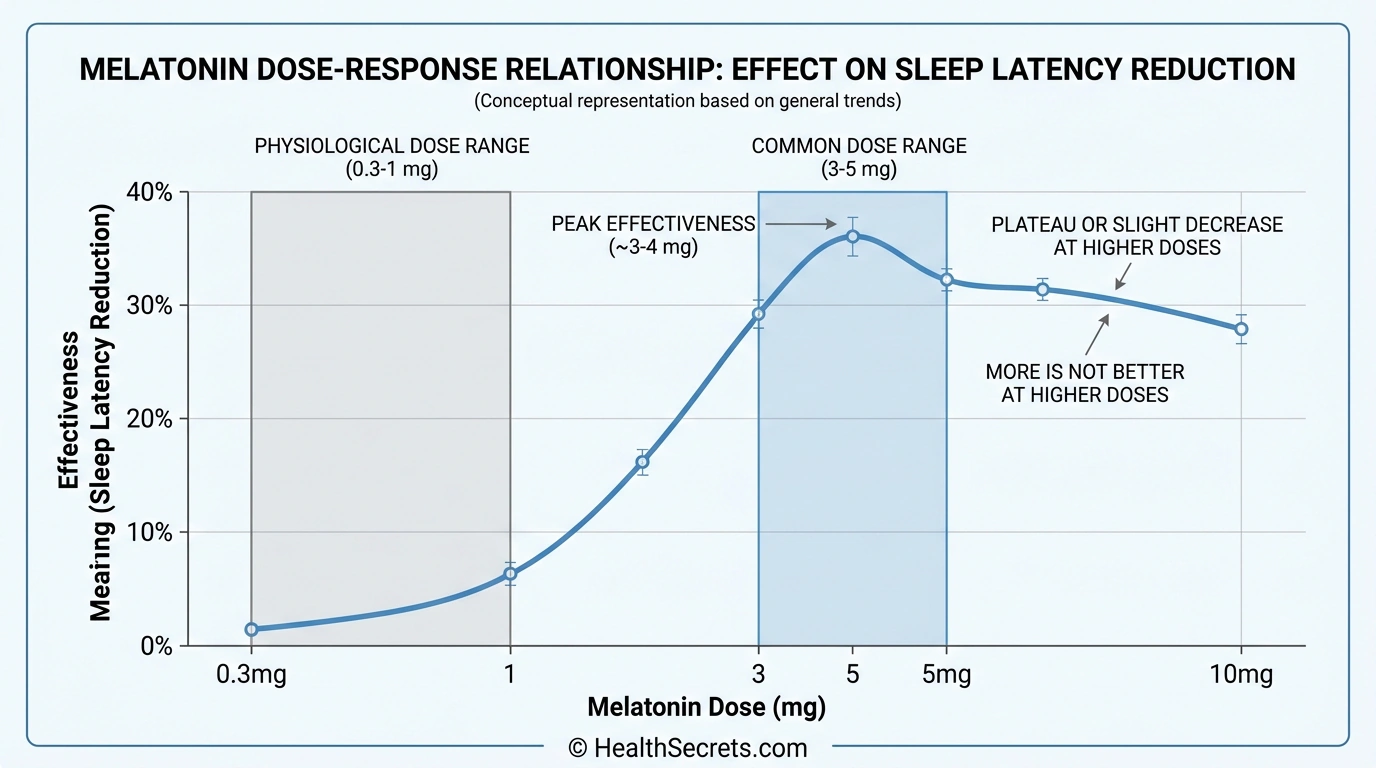
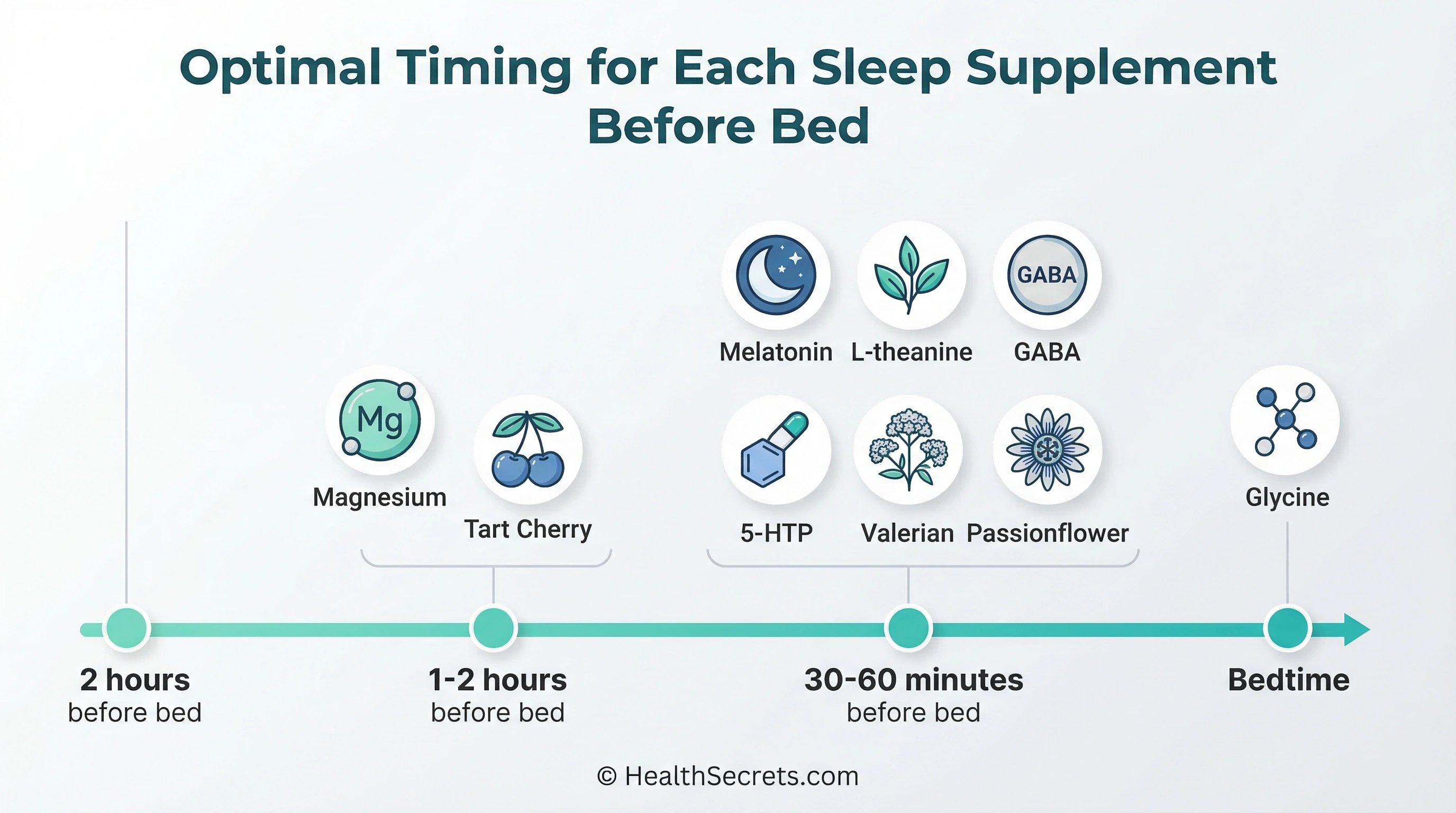
Most sleep supplements should be taken 30–60 minutes before your desired bedtime, starting at the lowest effective dose and increasing gradually over 3–5 days if needed. Timing, dose, and consistency are the three factors that determine whether a sleep supplement helps you or ends up collecting dust in your medicine cabinet.
What Is the Optimal Timing for Each Sleep Supplement?
- 30–60 minutes before bed: Melatonin, L-theanine, GABA, 5-HTP, valerian root, passionflower — these need time to reach effective blood levels.
- 1–2 hours before bed: Magnesium glycinate/threonate (some people absorb better with earlier timing), tart cherry juice/extract.
- Immediately before bed: Glycine (works quickly by lowering core body temperature).
What Are the Most Effective Sleep Supplement Combinations?
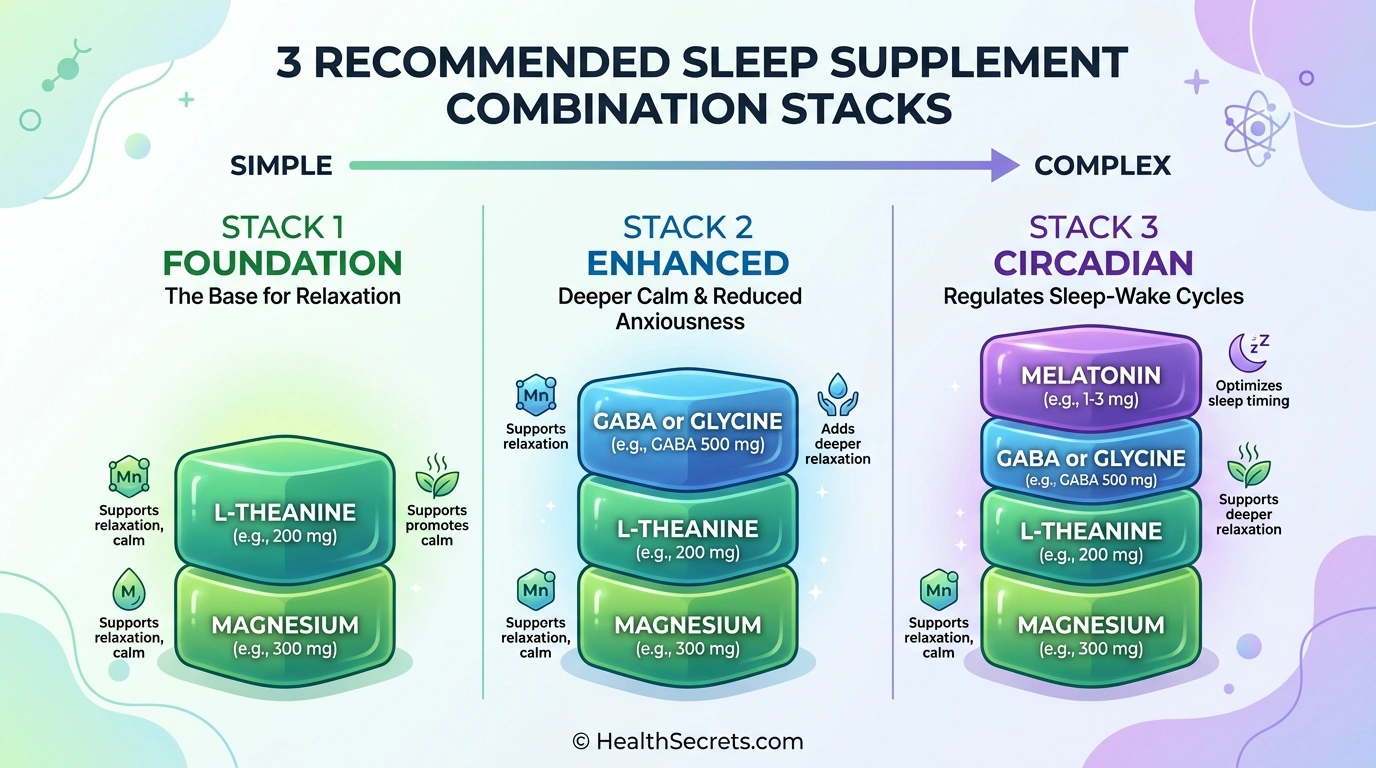
- Foundation stack (start here): Magnesium glycinate (300–500mg) + L-theanine (200mg) — well-tolerated, addresses relaxation and nervous system calming.
- Enhanced stack: Add GABA (100–200mg) or glycine (3g) if the foundation stack isn't sufficient after 1–2 weeks.
- Circadian reset stack: Melatonin (0.3–3mg) for jet lag, shift work, or delayed sleep phase — use short-term for circadian resetting, not as a nightly habit.
- Herbal stack: Valerian root (300–600mg) + passionflower (250mg) for anxiety-related insomnia — note that valerian takes 2–4 weeks for full effects.
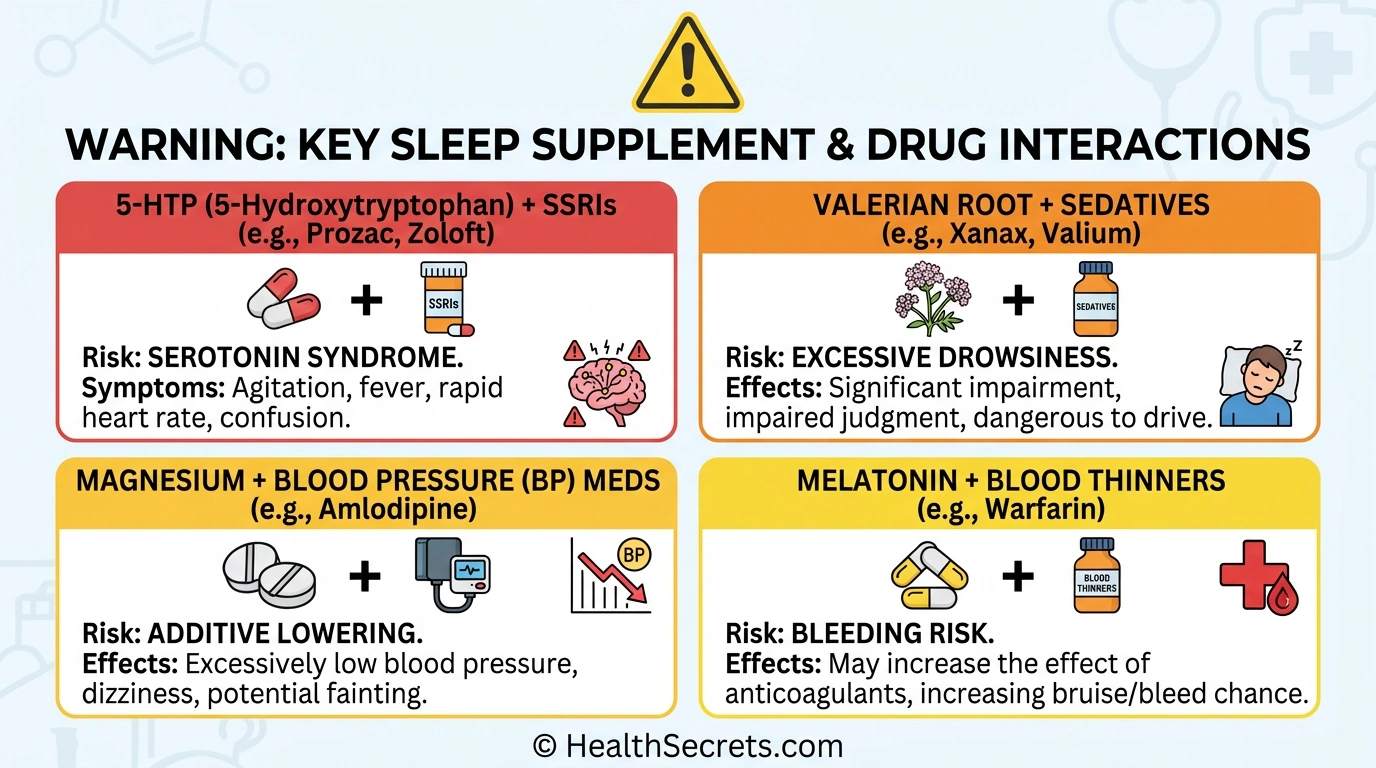
- Caution: Do not combine 5-HTP with SSRIs or MAOIs (serotonin syndrome risk). Consult your healthcare provider before stacking multiple supplements.
Are There Safety Concerns with Sleep Supplements?
Sleep supplements are generally well-tolerated when used at recommended doses, but "natural" does not mean risk-free. The most important safety considerations involve drug interactions with SSRIs and sedatives, pregnancy contraindications, and quality control issues in an industry where products are not FDA-approved before reaching store shelves.
Drug interactions to watch:
- 5-HTP + SSRIs/MAOIs: Risk of serotonin syndrome (agitation, confusion, rapid heart rate, high blood pressure) — never combine without physician approval
- Valerian/passionflower + sedatives: May enhance sedative effects excessively
- Magnesium + blood pressure medications: Additive blood pressure lowering
- Melatonin + blood thinners: May increase bleeding risk
Pregnancy and breastfeeding: Avoid most sleep supplements due to insufficient safety data (melatonin, 5-HTP, valerian, passionflower). Magnesium may be appropriate if deficient — consult your OB/GYN.
When to see a doctor instead of using supplements:
- Chronic insomnia lasting >3 months (may need CBT-I, which is 70–80% effective)
- Suspected sleep apnea (loud snoring, gasping, daytime fatigue) — supplements won't help
- No improvement after 4–8 weeks of supplement use
- Severe side effects or concerning medication interactions
Action Plan
What Should You Do First to Improve Your Sleep with Supplements?
Follow the sequence below, work through each phase in order, and use the checklist as your practical implementation guide.
Start by identifying your specific sleep problem, choosing a single foundational supplement, optimizing your sleep hygiene simultaneously, and adding additional supplements only if needed after 2–4 weeks. This systematic approach prevents the common mistake of throwing multiple supplements at a problem without knowing what actually works for your body.
Phase 1 — Foundation (Weeks 1–2):
- Identify your primary sleep issue: difficulty falling asleep, staying asleep, or poor quality
- Start magnesium glycinate (300mg) 1–2 hours before bed
- Add L-theanine (200mg) 30–60 minutes before bed
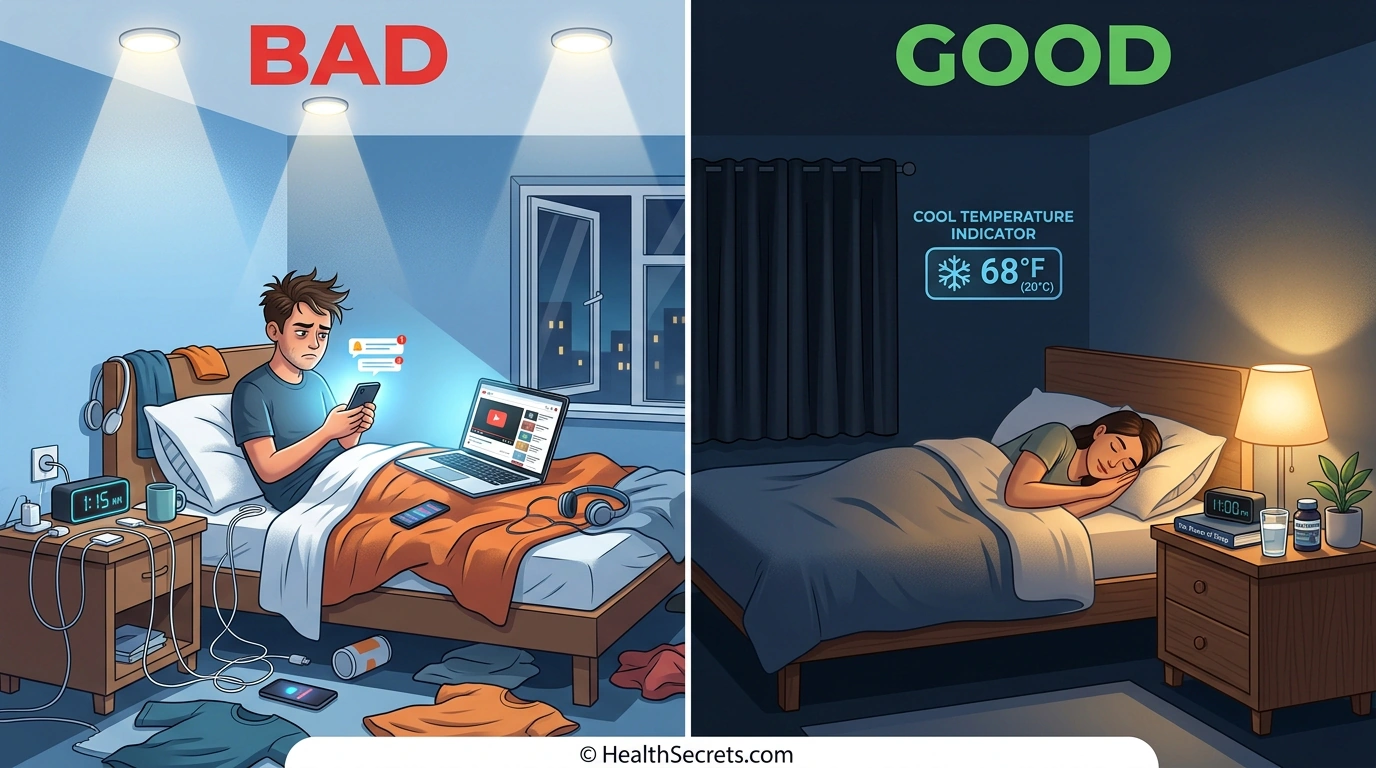
- Implement basic sleep hygiene: consistent bedtime, dark room, no screens 1 hour before bed
Phase 2 — Assess and Adjust (Weeks 3–4):
- Evaluate sleep quality improvement after 2 weeks
- If falling asleep is still difficult, add melatonin (0.3–1mg) 30–60 minutes before bed
- If anxiety/racing thoughts persist, add GABA (100–200mg) or glycine (3g)
- Optimize sleep environment: 65–68°F, blackout curtains, morning light exposure
Phase 3 — Optimize (Weeks 5–8):
- Fine-tune doses based on response (increase magnesium to 500mg if tolerated)
- Consider combination supplement if multiple single ingredients are working
- Track sleep quality with a journal or sleep tracker
- Consult healthcare provider if no improvement after 6–8 weeks