
Make Plant-Forward Protein Prep Simple, Satisfying, and Repeatable
This A4 meal-prep blueprint turns legumes, tofu, dairy or eggs, grains, nuts, and seeds into flexible batch formulas with shopping and storage prompts. It helps you organize protein-rich meals around your household needs without prescribing a single target or claiming that one pattern fits every body.

Why Most Advice Leaves You More Confused
What’s Inside the Complete System
Every section is authored to provide concrete, fillable tools rather than theoretical filler.
Plant-Protein Pattern Primer
The primer maps legumes, soy foods, dairy or eggs when used, grains, nuts, and seeds to common meal roles. It explains variety across the day and week without turning one meal into a chemistry exam. The outcome is a calm foundation for building meals that suit preference and access.
15 Batch-Cooking Formulas
Each formula pairs a prepared base, a protein-rich component, vegetables, sauce or seasoning, and a storage route. Vegetarian and flexitarian substitutions are built in so one preparation can serve bowls, wraps, soups, or lunch boxes. You finish with a repeatable cooking sequence instead of a long recipe hunt.
Protein and Portion Planning Grid
The grid lets you map meals and snacks across a week using label information and familiar household portions. It includes a blank line for a clinician- or dietitian-supplied target rather than assuming one number applies to everyone. The practical outcome is visible distribution and fewer last-minute gaps.
Shopping, Soaking, and Storage Protocol
The protocol organizes dry, canned, refrigerated, and frozen options with prep times, safe storage reminders, and budget swaps. It includes a batch calendar so cooking can be split into short sessions. The result is less waste and a more dependable supply of ready components.
Digestive Comfort and Tolerance Notes
A neutral log captures food form, portion, preparation, pace, and household observations when adding legumes or other higher-fiber foods. It encourages gradual changes and professional discussion when discomfort persists, without labeling a food as universally good or bad. You can see which preparation methods are most workable for you.
Clinician and Dietitian Handoff Sheet
The handoff page summarizes a representative day, protein sources, fortified foods, supplements, questions, and practical constraints. It has space to record professional advice and a follow-up date. This creates a useful bridge for people changing a long-standing eating pattern.
Is This System Right for You?
- Vegetarians, flexitarians, and omnivores who want more plant-forward meals with practical protein planning.
- Busy home cooks who would benefit from batch components that can become several different meals.
- Households balancing texture preferences, budget, cultural foods, and different levels of interest in plant-based eating.
- People preparing for a nutrition discussion who want to show actual meal patterns, storage habits, and questions.
- It is not an individualized protein prescription or medical nutrition plan for kidney disease, PKU, or another diagnosed condition.
- It is not a guarantee that a particular pairing, supplement, or food will meet your personal nutrition needs.
- It is not a substitute for a dietitian or clinician when appetite, weight change, swallowing, absorption, or other concerns need assessment.
Clinical Evidence & Scientific Grounding
The blueprint reflects the USDA Dietary Guidelines' support for varied nutrient-dense eating patterns that can include beans, peas, lentils, nuts, seeds, soy foods, whole grains, and other protein choices. It also follows the practical clinical nutrition principle described in ESPEN guidance that protein and energy needs should be considered in the person's health context, intake, function, and goals rather than assigned from a generic internet rule.
Planning and recording meals can make a dietitian's review more precise by showing sources, portions, preparation, tolerance, and feasibility. This publication is an educational household system: it does not calculate a diagnosis-specific target, assess adequacy for an individual, or replace professional nutrition care.
Want a Free Printable Quick-Start?
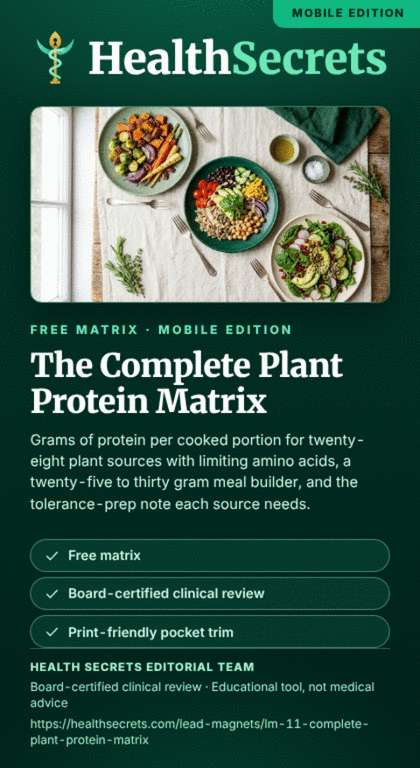
Grams of protein per cooked portion for twenty-eight plant sources with limiting amino acids, a twenty-five to thirty gram meal builder, and the tolerance-prep note each source needs.
Frequently Asked Questions
Ready to Bring Structure to Your Health?
Instant download. Lifetime digital access. Fully printable on A4 paper and fillable on tablets.